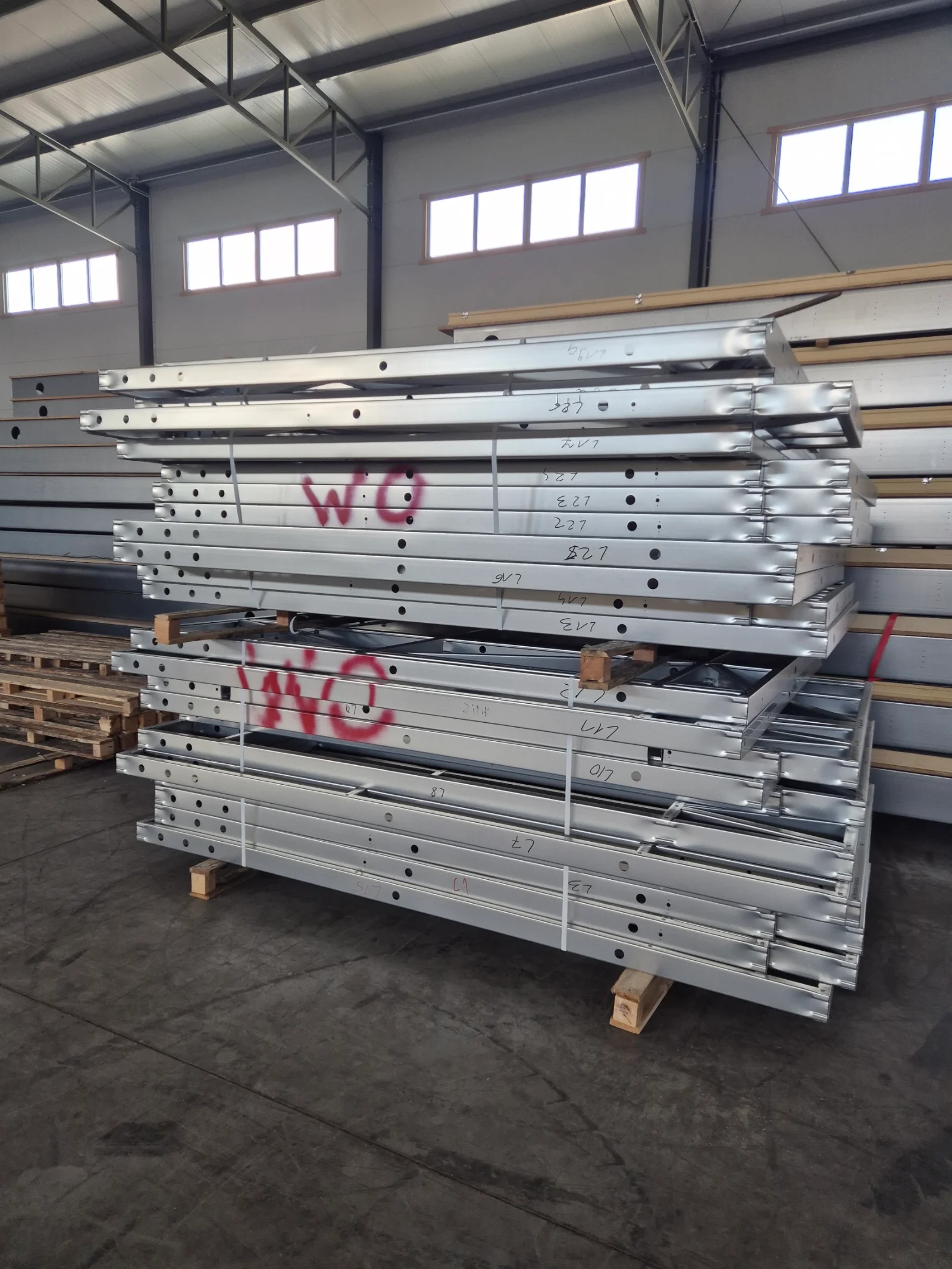
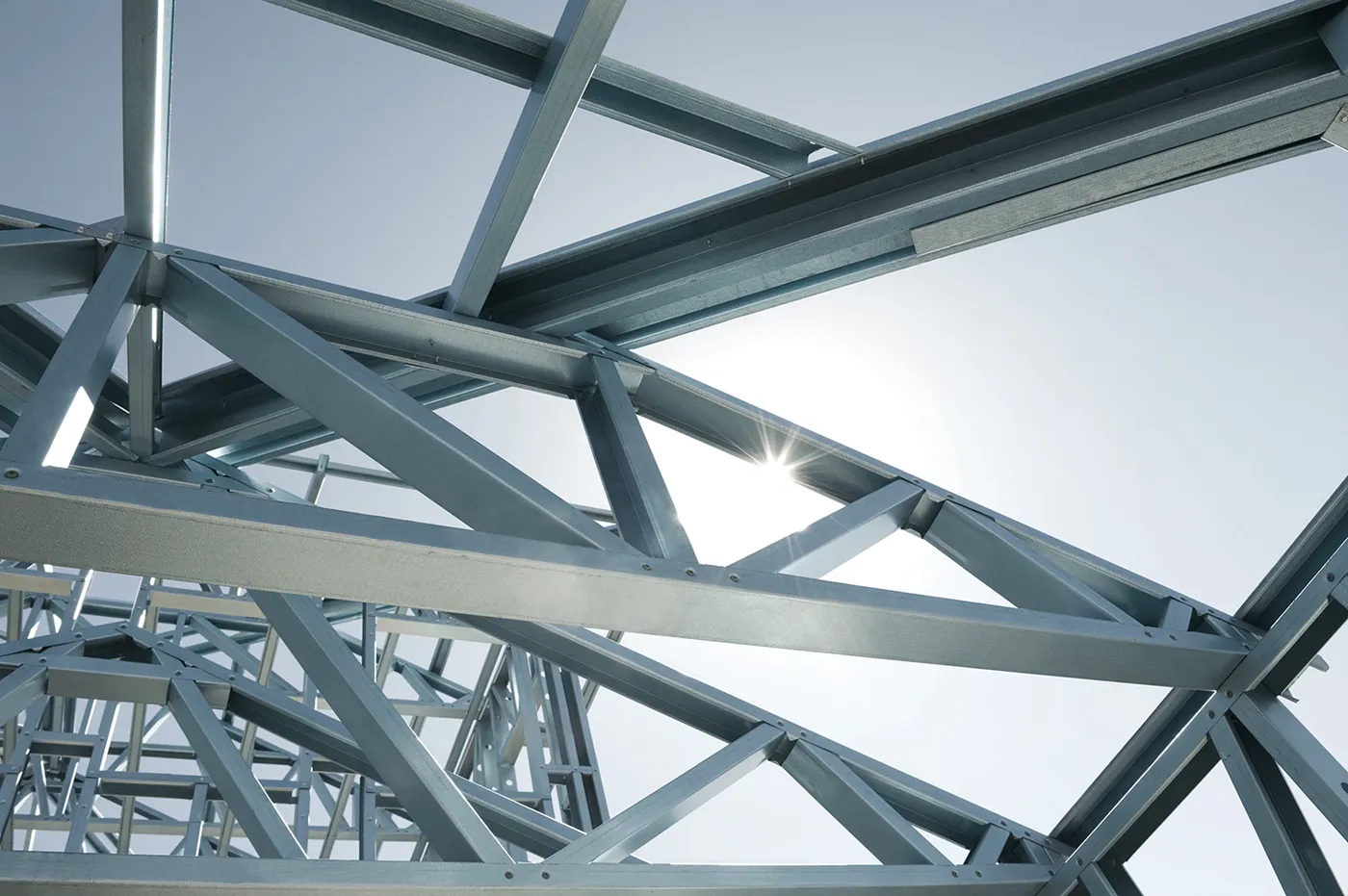
Magnelis® protects the profiles against corrosion, including at cut edges and punched holes.
Bare steel rusts. This is the first objection one hears about steel construction, and it's a legitimate one if we're only talking about unprotected steel. Our profiles are never used bare: they are formed from coils of steel coated with Magnelis®, an alloy of zinc, aluminum, and magnesium developed by the European steel industry, of which ArcelorMittal is a leading producer.
This coating differs from classic hot-dip galvanization (a pure zinc deposit) through its multi-layered composition: the zinc provides basic cathodic protection, the aluminum densifies the layer and slows its depletion, and the magnesium gives it a rare property: self-healing. For an identical coating thickness, this combination offers corrosion resistance up to two to three times that of a standard zinc coating, according to salt spray tests published by steel producers.
Self-healing is the most useful property on a real job site. Every time a profile is cut, punched, or drilled—in the workshop or on site—the exposed edge should, in theory, become a weak point. With Magnelis®, the magnesium in the surrounding coating migrates via a galvanic effect and locally seals the protection over the exposed area, with no need for intervention or additional post-cut treatment.
In practice, this means an installer can drill a fixing hole or cut a profile to size without compromising the durability of the assembly—a direct advantage for on-site adaptability that would be impossible to guarantee with a simple paint job or a localized post-cut surface treatment. This is a key difference compared to factory-painted or electro-galvanized steel, where any on-site touch-up remains an artisanal process dependent on the installer's care.
The next question that comes up is about real-world durability. Zinc-aluminum-magnesium coatings are designed to last for the entire useful life of a structure, generally estimated at over one hundred years for a frame that is properly ventilated and protected from water stagnation. This is a timescale consistent with the available field experience on this type of coating since its introduction in construction, and it is far superior to the lifespan of a simple surface protection applied after cutting.
Combined with a design that avoids water-retention points and ensures proper wall ventilation, this protection is engineered to require no corrective maintenance plan for the frame itself. This point of vigilance remains, however, essential for the building envelope (cladding, waterproofing, windows), as it is for any type of building, regardless of its load-bearing structure.